
Game Dev · VR / MR · Systems & tooling
Line Breaker
A hand-controlled runner, built around authored content.
From a visual level editor to a bounded multiplayer world: the engineering behind Line Breaker, formerly XRunner.
- My role
- Sole developerClient as game designer · art and audio by other contributors
- Engagement
- Approximately 2024–2026
- Stack
- Unity · NGO · SimpleSQL
01Sole developer. A collaborative game.
Line Breaker, formerly XRunner, is a hand-gesture-controlled third-person VR/MR runner and platformer, with a campaign and endless play. I was the sole developer over approximately 2024–2026, working with the client as game designer and with other art and audio contributors.
My work covered the Unity architecture, runtime systems, optimization, custom designer tooling and multiplayer engineering. Sole developer describes my programming responsibility, not sole authorship of the game or its creative assets.
Public release status: the game is available in Early Access. Its official site currently labels multiplayer “Coming Soon.” The multiplayer systems described here were implemented; this is not a claim that multiplayer is publicly released or that all development has ended.
02Give the designer control over the run.
The campaign and endless mode needed reusable content that the designer could author deliberately. I built a custom visual Unity editor to assemble platform sequences and maps, persist them to Asset Store SimpleSQL, and package their data for runtime.
- Author visuallyAssemble reusable platform sequences and maps in Unity.
- Persist & packageStore the authored data in SimpleSQL and prepare it for runtime.
- Sequence by rulesChoose content using stage, difficulty and pacing constraints.
Endless play uses rule-driven sequencing of designer-authored content. Stage and difficulty pools, checkpoints, speed and spacing govern what appears next. It is not unrestricted procedural level generation.
03Keep enough world ahead. Recycle what is behind.
I built a world buffer ahead of the leading player and recycled content behind the trailing player. That keeps the active play space available for players at different positions without letting the world grow without bounds.
- Behind the trailing playerRecycle content that is no longer needed.
- Across the player windowKeep the shared active space available.
- Ahead of the leading playerPrepare upcoming authored sequences.
Network objects use bounded, prewarmed pools. The architecture brings object reuse, runtime sequencing and multiplayer object lifecycles together.
04Split responsibility where it makes sense.
Using Netcode for GameObjects, I implemented owner-controlled avatar motion and animation alongside server-coordinated shared objects and projectiles. The authority model is split by responsibility; the whole game is not server-authoritative.
My multiplayer work also included player interactions, attack power-ups and leaderboards with global and friends-filtered views. These are engineering contributions, distinct from the current public multiplayer availability.
05Recognize intent, not every hand movement.
Gesture input can misread a resting hand or a newly initialized tracking state as a jump or slide. I combined head-relative hand height, resting-state checks and cold-start gates to reduce accidental actions.
The goal was to keep the control scheme responsive while filtering inputs that did not represent the player’s intention.
06Watch the official trailer.
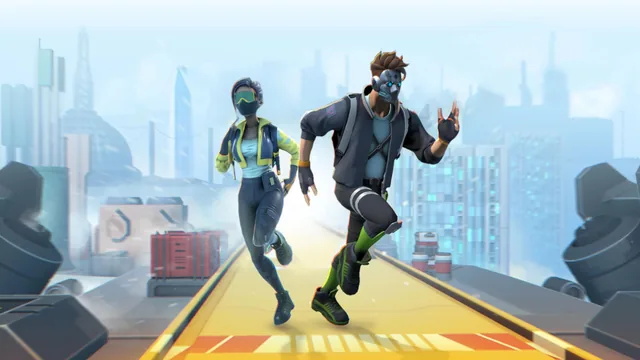
The official trailer shows the game’s movement and environment. Trailer and promotional art belong to the Line Breaker project and its contributors.
Loads YouTube only when selected. Playback does not start automatically. Watch on YouTube ↗
07Project context & credits.
Developer: GiasteXR. Publisher: Giaste FZ LLE. My role: sole developer, with the client as game designer and other contributors providing art and audio.
The August 19, 2025 store release is a product milestone, not the start date of my engagement. The work described here spans approximately 2024–2026.